
Water, above all. Beneath the Euganean Hills, care begins long before it reaches us
-
Posted by

In Montegrotto Terme, there is a place where understanding the present simply requires looking a few metres below street level.
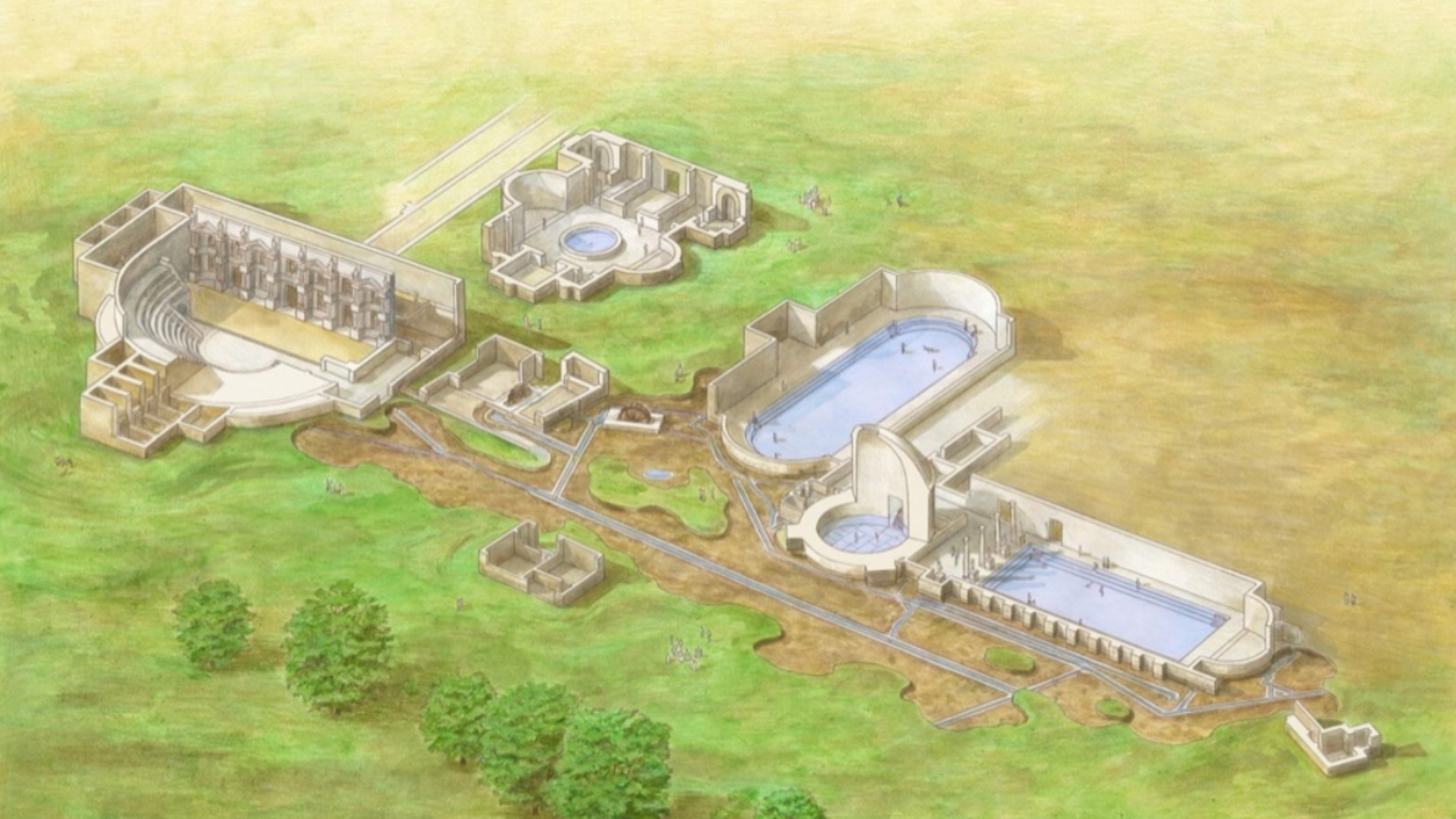
In the archaeological area of Via degli Scavi, the remains of a vast Roman thermal complex, first built in the 1st century BC, can still be seen. Three pools designed for bathing, an elaborate system of channels to control the water, areas devoted to rest and even a small theatre tell a surprisingly familiar story: two thousand years ago, in this corner of the Euganean territory, water was already regarded as far more than a simple resource. It stood at the heart of an entire understanding of wellbeing.
The Romans knew its benefits long before science was able to explain their origin. Today, however, we can trace its journey.
And the first surprise is that Euganean thermal water does not owe its heat to the volcanoes of the Euganean Hills. That geological phenomenon is far too ancient. The story begins further away, in the Little Dolomites, where rainwater slowly penetrates the limestone and descends deep underground, reaching depths of up to 3,000–4,000 metres. There, it encounters the Earth’s natural heat and, as it passes through the rock, gradually acquires both temperature and mineral content.
Then it rises again.
Deep fractures within the Euganean geological structure, together with the pressure of the vast underground basin, allow the water to make its way back towards the surface. But what re-emerges is no longer simply rainwater.
It has become hyperthermal saline-bromide-iodide water, reaching temperatures of up to 87°C in the hottest wells. Above all, it carries with it the result of a timescale that belongs more to geology than to our everyday experience: according to the Pietro d’Abano Thermal Studies Centre, its journey takes at least fifty years and may, in fact, extend over thousands of years.
Thinking about this changes our perspective. When we look at the water in a thermal pool, we see something that appears simple, transparent and immediate. Yet what lies before us has travelled through rocks, depths and spans of time that remain invisible to us. And it is precisely during that unseen journey that the water acquires its identity.
Its story continues when it meets another deeply Euganean element: clay. In the maturation tanks, thermal water and clay remain in contact for at least two months at a temperature of around 40°C. A biofilm forms on the surface, populated primarily by cyanobacteria — microorganisms that have attracted particular scientific interest in recent years.
Some of the biomolecules produced during this process have demonstrated anti-inflammatory activity and form the basis of the European patent obtained for the active compounds of Euganean thermal mud.
What for centuries was known through experience is today observed, measured and studied. Nature does not lose its fascination when science explains it. On the contrary, it acquires a new one.
Perhaps this is one of the most extraordinary qualities of Euganean thermalism: its ability to bring together profoundly different dimensions of time.
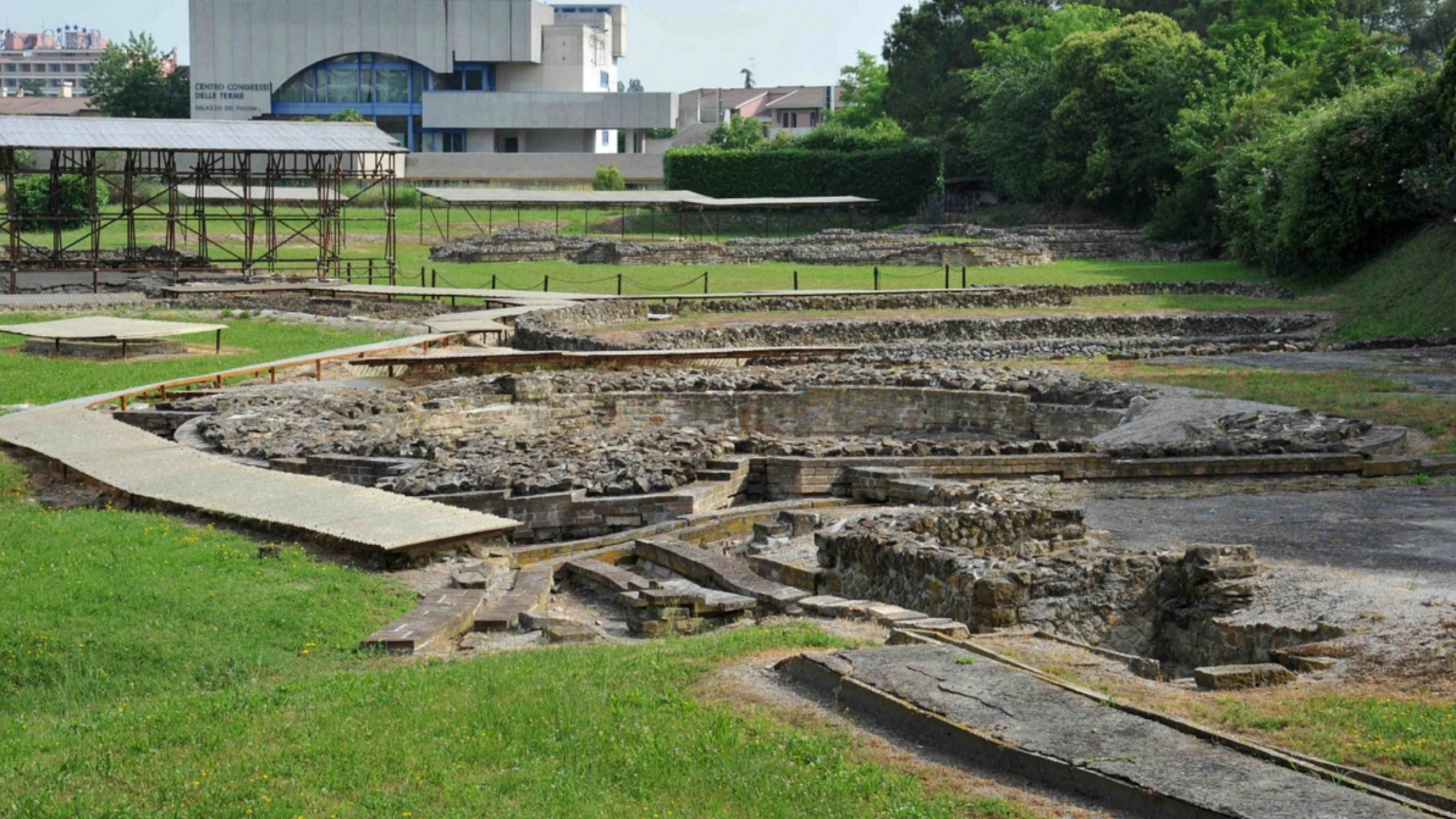
The ancient pools of Montegrotto and today’s thermal destinations belong to eras that might appear to have nothing in common. Gestures, architecture and the tools through which we observe the body and understand nature have all changed. And yet, at the centre of it all, the same presence remains: water.
And it is precisely this distance between what we see and everything that came before it that gives water its particular meaning. Because care, ultimately, often has the same nature: it begins before the moment in which we perceive its effects. It requires time, knowledge and continuity. And behind an apparently simple gesture, it holds a story that is not always visible.
So today, when we step into thermal water, we encounter more than the warmth that envelops the body. We encounter the land from which it comes, the time that transformed it, the knowledge that learned to recognise its value, and a story that had already begun long before it reached us.
In Abano, the first scent you notice is that of ancient, deep water, arriving from afar after a long underground journey. It is a warm, mineral scent, slightly saline, almost metallic. You sense it as you enter Hotel Tritone and its magnificent pools. A metallic scent that tells the story of the deepest part of this land — the part that remains unseen. It is the scent of healing warmth. Of steam rising slowly. Of skin beginning to relax. Of quiet rooms where time itself seems to change pace.
This is the path followed by LIVE! – Live the Land of Venice, a project our Hotel has also joined, created to present Veneto as a cultural, experiential and sustainable destination. LIVE! brings together hospitality businesses, cultural venues, creative organisations, food and beverage establishments and tourism operators, building itineraries and travel proposals that invite guests to discover the region beyond its most predictable routes. It is not only about promoting places, but about creating experiences: slow-paced journeys, encounters, artistic suggestions, moments of discovery and opportunities to connect with the most authentic identity of Veneto. The project particularly enhances the dialogue between tourism, widespread culture and quality hospitality, proposing a deeper way of inhabiting the travel experience.

Operation supported by the Veneto Regional Programme ERDF 2021–2027
Call for the consolidation of SME clusters
for initiatives in national and international markets
ID 241377_006033 – CUP B98J25010770007
Financial data:
Eligible expenditure: €499,672.95
Grant awarded: €321,889.42